

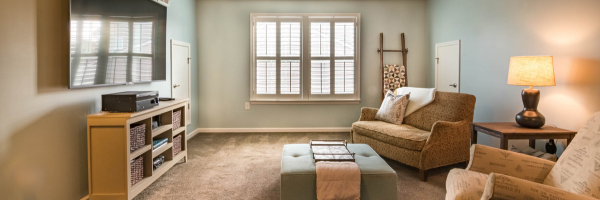
The way a room is arranged can completely change how a buyer feels when they walk in.
A good layout helps a buyer understand the space quickly. It shows them where they would relax, eat, work, entertain, sleep or spend time as a family. A poor layout can make even a lovely home feel smaller, awkward, cramped or difficult to live in.
When selling, you are not just showing buyers what your home looks like. You are showing them how it works.
Buyers need to “get” the room quickly
Most buyers make quick judgements during a viewing. They are walking from room to room, taking in layout, light, storage, space, and overall feel.
If a room is cluttered, blocked by furniture or difficult to move through, buyers can become distracted. Instead of noticing the size of the room, the view, the fireplace or the natural light, they are thinking about where to step next.
That matters.
When someone walks into a room, they should be able to enter easily, move around comfortably and take the whole space in without feeling overwhelmed. They should not feel as though they are squeezing past furniture, dodging piles of belongings or afraid to walk fully into the room.
A room should invite buyers in, not make them hesitate at the doorway.
Start by looking at the room with a buyer’s eye
Before you change anything, stand at the entrance to each room and pause.
Ask yourself:
What is the first thing I notice?
Can I see the best feature of the room straight away?
Is it obvious what this room is used for?
Can I walk in easily?
Does the furniture make the room feel spacious or cramped?
Is there anything that makes the room feel cluttered, dark or confusing?
This is not about judging your home harshly. It is about seeing it the way a buyer will see it. You know how your home works because you live there. A buyer does not. They need the layout to explain it for them.
Flow is everything
Flow is one of the most important parts of a successful layout.
A room should feel easy to move through. Buyers should be able to walk naturally into the space, look around and imagine themselves using it. If the route through a room is blocked by oversized furniture, storage boxes, children’s toys, extra chairs or side tables, the room can feel smaller than it really is.Good flow creates a feeling of ease.
In a living room, buyers should be able to walk in without having to step around the back of a sofa. In a bedroom, they should be able to move around the bed comfortably. In a kitchen or dining space, they should be able to see how people would cook, sit, eat and socialise.
The easier a room is to move through, the easier it is for buyers to imagine living there.
Give every room a clear purpose
One of the biggest mistakes sellers make is allowing rooms to become too many things at once.
A spare room that is part office, part storage space, part laundry area and part dumping ground can confuse buyers. They may struggle to see the value of the room because its purpose is unclear.
Before viewings, try to give each room a simple, obvious role.
A bedroom should feel like a bedroom. A dining area should show where people can sit and eat. A home office should look like a calm, practical workspace. A living room should feel comfortable and easy to relax in.
This does not mean your home has to look like a show home. It just means buyers should not have to work too hard to understand the space.
Clutter changes how buyers see the room
Clutter does not just make a room look untidy. It changes the way buyers judge the size and potential of a room.
Too many items on surfaces, too much furniture, full corners, overflowing shelves, and blocked walkways can all make a room feel smaller. Buyers may not consciously think, “This room is cluttered.” They may simply feel that the house lacks space.
That can affect how they value the property.
Before selling, be honest about what each room really needs. Remove anything that does not help the space look useful, calm or attractive. Clear floors, simplify surfaces, and make sure doors can open fully.
You want buyers looking at the room, not the belongings in it.
Furniture placement can make or break a room
Furniture should help a room make sense.
In some homes, furniture has ended up in a certain position simply because that is how it has always been. But the layout that works for everyday life is not always the best layout for selling.
A large sofa may be comfortable, but if it blocks the entrance to the room, it may make the space feel cramped. A dining table pushed into a corner may work day to day, but it might not show the room’s full potential. A bed placed awkwardly can make a bedroom feel smaller than it is.
Sometimes small changes make a big difference.
Pull furniture away from doorways. Create clear walkways. Avoid blocking windows. Let buyers see natural light. Arrange seating so the room feels welcoming, not closed off.
The goal is to make the room feel easy to understand and easy to enjoy.
Show the best feature first
Every room should have a focal point.
It might be a fireplace, a window, a garden view, a beautiful kitchen island, a bay window, fitted storage or simply a sense of space.
When you stand in the doorway, ask whether the layout is helping buyers notice that feature or hiding it. If the best part of the room is blocked by furniture or lost behind clutter, the room is not working as hard as it could.
A good layout guides the buyer’s eye naturally towards what matters most.
Think about photographs too
Your layout matters during viewings, but it also matters before anyone even steps through the door.
Most buyers see your home online first and the way a room is arranged can make a huge difference to how it photographs. A clear, balanced layout can make images look brighter, bigger and more appealing.
If a room looks cramped in photos, buyers may scroll past before they have even booked a viewing. This is why preparation matters. The layout should work in person and on camera.
Room layout is not a small detail
When selling your home, layout is not a small detail. It can affect how buyers feel, how easily they understand the space, and how quickly they imagine themselves living there. The best layouts feel effortless. Buyers can walk in, move around, take in the room, and instantly understand its purpose.
Before you come to market, look at every room with fresh eyes. Clear the clutter. Improve the flow. Make the purpose obvious. Show off the best features. Let every room breathe.
Because when buyers feel comfortable in a home, they are far more likely to fall in love with it.
email This email address is being protected from spambots. You need JavaScript enabled to view it.
01603 660000